
You Belong in the Field: Inspiring the Next Generation of Women Conservationists
Meet Kylee Warren, a Conservation Media Producer in Western Nebraska whose work bridges storytelling and environmental stewardship. In this interview, she shares how a lifelong love of nature became a purpose-driven career—and why giving voice to wild places matters now more than ever.
What inspired you to pursue the path you’re on today? Was there a moment that solidified your decision?
I’ve always been drawn to nature, wildlife, and the vast, wind-swept beauty of the Great Plains. As a child, I pored over the pages of National Geographic and watched every nature documentary I could find. I was captivated by the natural world and the power of visual storytelling—but I didn’t know how to turn those passions into a single, meaningful career.
Shortly after college, my aunt and uncle took me to Nebraska to witness the Sandhill Crane migration. That trip changed everything. Watching tens of thousands of cranes descend upon the Platte River under opalescent skies was awe-inspiring—a true spectacle of wildness and resilience. As I learned more, I was disheartened to discover how close these birds had come to disappearing due to habitat loss and overhunting—and how their recovery was only possible because of decades of dedicated conservation work.
That moment ignited something in me. I suddenly saw how urgent and vital these stories were—and how few people were telling them.
Still, I couldn’t see a clear path forward. At the time, I didn’t believe conservation could be a viable career, financially speaking. So I decided to pursue media professionally—a skill I could teach, use commercially, and hopefully apply one day to tell the stories that mattered to me most.
Throughout graduate school, I kept returning to the cranes in my work. Shortly after earning my doctorate, I was given the chance to document the cranes of western Nebraska—a project that reignited my purpose. From there, I began producing virtual livestream programs for Crane Trust, an experience that has allowed me to build a growing archive of content capturing the fragile, beautiful life of the Great Plains.
Looking back, that first trip to see the cranes wasn’t just memorable—it was the moment I realized I didn’t have to choose between storytelling and conservation. I could do both, and I’ve been following that path ever since.
What’s a professional challenge that still keeps you up at night, and how are you navigating it?
One professional challenge that still keeps me up at night is managing my own time and motivation—especially in a field where so much of the work is self-directed and often happens without external structure. The creative and conservation worlds can be deeply fulfilling, but they also demand a level of discipline and focus that isn’t always easy to sustain.
To navigate this, I’ve been actively developing tools and habits to better structure my days and protect my time. I rely on a weekly planner to block out tasks and priorities, and I use timers or timeboxing techniques to stay present and avoid drifting between projects. I’ve also started taking professional development courses to improve my productivity skills, and I’m learning to give myself grace—recognizing that growth in this area is a process, not a quick fix.
At the heart of it, I’ve realized that managing time well isn’t just about efficiency—it’s about protecting the space to do meaningful work and show up fully for the things that matter most.
How do you define success on your own terms?
To me, success is about whether the work I do contributes meaningfully to something larger than myself. I define success as using my time and talents to give back, to protect what’s vulnerable, and to improve the world around us in lasting ways. For my part, that means dedicating myself to the protection and preservation of America’s last wild ecosystems—the rivers, prairies, and migratory flyways that still pulse with life.
Through storytelling, education, and on-the-ground engagement, I strive to amplify the voices of the natural world and inspire others—especially the next generation—to care about what we stand to lose and what we can still save. If I can help even one person feel more connected to the natural world and motivated to protect it, then I consider that a success.
What does the world need more of—and what does it need less of?
I believe the world needs more people who are willing to stand up for the natural world—to protect it, learn from it, and tell its stories with honesty and heart. We need more empathy, more stewardship, and more collective responsibility for the planet we share. I also believe we need more connection—to each other, and to the Earth that sustains us.
What the world needs less of is unchecked materialism, ambition for ambition’s sake, and the kind of greed that measures success by accumulation rather than impact. I hope we can move toward a future shaped by a circular economy—one where the things we make are built to last, sourced responsibly, and designed with reuse in mind. Ultimately, I envision a world where we prioritize balance over excess, relationship over rivalry, and regeneration over exploitation.
How do you hope your work and story will inspire the next generation of women and girls?
When I was growing up, I rarely saw women leading the way as conservation photojournalists—especially in the rugged, remote corners of the world where wildlife stories unfold. That absence made it harder to imagine myself in that role. Today, I hope my work shows the next generation of women and girls that they absolutely belong in the field—not just as observers, but as storytellers, scientists, and stewards of the natural world.
I want them to know that their voices matter, their perspectives are needed, and their presence can help shape a more inclusive and resilient future for our planet. Whether it’s through the lens of a camera, the rhythm of a pen, or the grit of hands-on conservation work, I hope my story encourages them to step into wild places with confidence—and to protect those places fiercely for the generations yet to come.
How do you start your day in a way that sets the tone for success?
I feel most grounded and focused when I can begin the day in motion—ideally with a sunrise shoot in the field, documenting wildlife in their natural habitat. There’s something about starting the day quietly, as the world wakes up, that reminds me why I do what I do. On days I’m not shooting, I try to begin with something physical and intentional—a walk, a hands-on project, or even a simple chore that gets me moving and thinking proactively.
I’ll admit, not every morning goes perfectly—life has its way of rearranging the best-laid plans—but I’ve learned that my most successful days often start with momentum, presence, and a sense of purpose.
 Kylee Warren, Ph.D. is a Conservation Media Producer and Wildlife Content Creator based in Central Nebraska. She specializes in delivering immersive virtual livestreams for members of a conservation trust, bringing the rhythms of wildlife and the beauty of the Great Plains directly to audiences around the world. Through storytelling, photography, and real-time digital engagement, she works to deepen public connection to the natural world and highlight the importance of protecting vulnerable ecosystems. Her work is rooted in a belief that meaningful conservation begins with awareness and that even the most remote wild places deserve a voice.
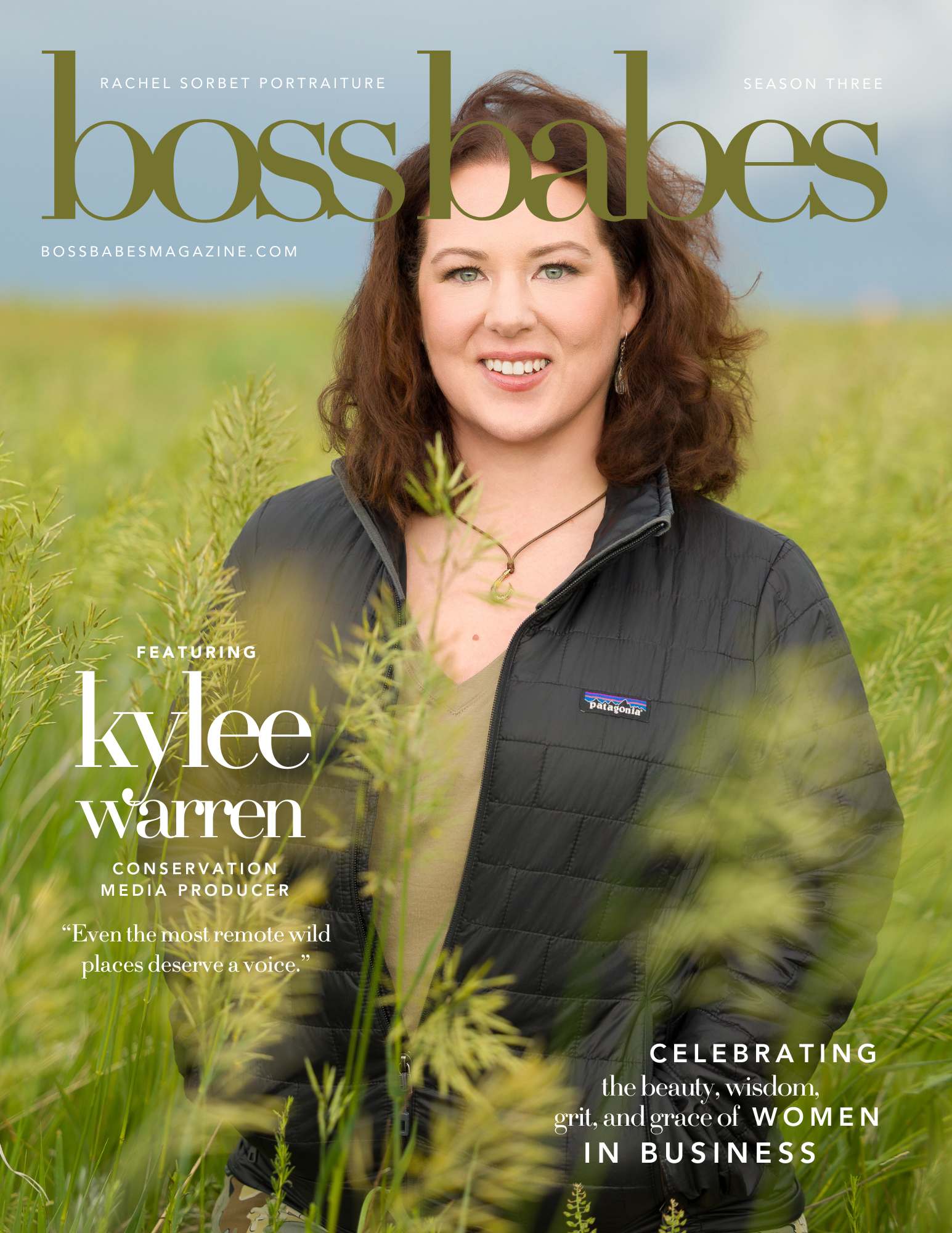
➟ Printed copies of Boss Babes Magazine featuring Kylee Warren on the cover are available for purchase.
Share this article on social!

Want to be featured next?
Hello, I’m Rachel Sorbet, a portrait photographer in Denver and founder of Boss Babes Magazine. As a women’s business portrait specialist, I found myself being inspired by the career journeys of the women I photographed. My desire to spotlight these incredible women and share their wisdom with the world led me to create this magazine. The publication is a celebration of driven women, their grit, grace, and determination and all career-oriented women are encouraged to apply to be featured.
Related Posts
Shay Mower
Shay Mower is a serial entrepreneur and AI specialist working at the intersection of AI,…
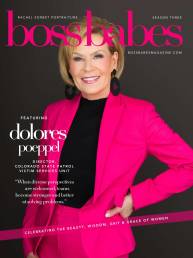
Dolores Poeppel
For nearly five decades, Dolores Poeppel has dedicated her career to standing beside…

Brooke Berndt
Brooke Berndt is a business coach who teaches entrepreneurs how to grow their business…

Book Jennings
Brook Jennings is the founder of Elevate, Actually, and a nationally recognized sales and…