

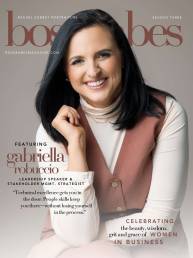
Redefining Leadership: How Emotional Intelligence Became Gabriella Robuccio’s Greatest Power
What was the journey to opening your leadership training business?
I was almost 12 years into my ESPN career when I left to manage an events team at a healthcare foundation. That’s when everything shifted.
For the first time, I had access to formal leadership training—emotional intelligence workshops, conflict management courses, the things you get when you’re “officially” middle management. And I had two realizations that completely changed the trajectory of my career.
First, I realized I’d been doing this work all along. The relationship management, navigating stakeholder dynamics, using emotional intelligence to make people feel seen—that had always been part of my role, even when my title said “producer” or “coordinator.” It just was never named or valued as a skill.
Second, I realized I’d never actually been trained in it. I was winging it. And if I wasn’t getting trained—someone who naturally gravitated toward this work—what about the people who didn’t? How were they supposed to navigate difficult conversations, manage conflict, or lead without authority if no one ever taught them how?
So I started applying what I was learning to my own team. I taught them how to set boundaries, manage stakeholders, and stay grounded under pressure. Watching them implement those skills—and avoid the burnout I had experienced—was more rewarding than any of my official tasks.
That’s when I knew this work needed to reach more people.
Everyone is leading in some capacity, whether they have the title or not. If you’re not trained in how to do that well, you’re missing a critical part of a healthy professional foundation. And that’s how burnout happens.
So I decided to go bigger.
How do you find strength during moments of doubt, burnout, or adversity?
I give myself permission.
For years, I thought strength meant saying yes to everything, working harder, and never showing weakness. But that version of “strength” nearly broke me.
Now, when I’m struggling, I remind myself: I’m allowed to set boundaries. I’m allowed to value my time. I’m allowed to protect my mental health. That’s not weakness—it’s survival.
The first few times I set a hard boundary—telling a client “that’s not sustainable” or telling my boss “I can’t take on one more thing”—I was terrified of seeming difficult or damaging the relationship. But most people respected me more for being clear and honest. The relationships actually improved. And I stopped resenting the work I loved.
So when doubt creeps in, I go back to this truth: Clear boundaries create healthy relationships. They don’t damage them. And no paycheck is worth sacrificing your well-being.
If you could go back to the beginning, what’s something you would do differently?
I would have invested in myself—and in the skills that make you a whole person—much earlier.
For the first decade of my career, I focused almost entirely on tactical excellence: timelines, budgets, logistics. I believed if I executed flawlessly, everything else would fall into place.
But I neglected the interpersonal skills that actually determine whether you thrive or burn out: emotional intelligence, communication, boundary-setting, and conflict navigation.
No one formally trained me in those things. No one said, “Here’s how to manage a difficult stakeholder,” or “Here’s how to stay grounded under pressure,” or “Here’s how to set a boundary without burning a bridge.” So I assumed they weren’t as important.
But here’s what I know now: Technical excellence gets you in the door. People skills keep you there—without losing yourself in the process.
If I could go back, I’d invest earlier in leadership training, therapy, coaching—anything that helped me show up as my best self, not just my most productive self. Sustainable success isn’t just about being good at the work. It’s about being whole enough as a person to do the work without sacrificing your well-being.
Is there a quote or mantra that speaks to your soul and fuels your motivation?
“At the end of the day, people just need to feel seen, heard, and appreciated.”
It’s simple, but it’s everything. Whether you’re managing a high-stakes event, leading a team, or navigating a difficult stakeholder relationship, people aren’t asking for perfection. They’re asking to be treated like human beings.
This mantra guides everything I do. When I’m preparing for a difficult conversation, designing a workshop, or coaching a leader who’s struggling, I come back to this question: How can I make this person feel seen, heard, and appreciated? When people feel valued, they collaborate instead of resist. They trust instead of defend. And that changes everything.
How do you hope your work and story will inspire the next generation of women and girls?
I hope they see that they don’t have to choose between being successful and being human.
I once had a leader at ESPN—Amy—who embodied this. She could walk into a room of 50 stressed-out people and somehow make everyone feel capable. Not because she had all the answers, but because she stayed grounded, asked thoughtful questions, and made people feel seen. She was excellent at her job and she treated people with kindness. That combination was revolutionary to me.
I want the next generation of women to know: You’re allowed to be ambitious and set boundaries. You’re allowed to care deeply about your work and protect your mental health. You’re allowed to lead with empathy and still be taken seriously. You don’t have to burn out to prove your worth. And you don’t have to do it alone.
What’s one ritual or habit that keeps you focused and feeling like yourself?
Running.
I’ve run multiple marathons, and honestly, running saved my life. It taught me how to manage anxiety and depression before I even had language for what I was experiencing. It gave me tools for processing stress, building resilience, and proving to myself that I could do hard things.
When I was running consistently, I was grounded. Clear-headed. Present. Some of my best ideas came during long runs. Some of my hardest decisions found clarity when I was simply putting one foot in front of the other.
But here’s the hard truth: I haven’t been running since becoming a mom and starting my business. Life filled up—two kids, no childcare safety net, building something from scratch—and running fell off the list. And I’ve felt it. This is my reminder—and maybe yours—that the practices that keep us whole aren’t luxuries. They’re necessities.
Running taught me endurance and resilience. It taught me that you don’t have to be fast—you just have to keep going. That applies to marathons. It applies to business. And it applies to showing up for yourself when life feels full.
I’m working on getting back to it. Because I know I’m better—calmer, clearer, more present—when I do.

Gabriella Robuccio is an Emmy Award–winner and leadership strategist who helps organizations build stronger, healthier workplace cultures through her keynote speaking and leadership training. Drawing from her experience producing high-profile global events, she equips leaders with practical tools to foster trust, alignment, and meaningful results.
Reprints of Boss Babes Magazine featuring Gabriella Robuccio on the cover are available for purchase from our on-demand printer.
Share this article on social!
Want to be featured next?
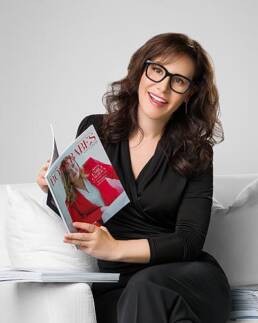
Hello, I’m Rachel Sorbet, a personal brand photographer in Denver and founder of Boss Babes Magazine. As a women’s business portrait specialist, I found myself being inspired by the career journeys of the women I photographed. My desire to spotlight these incredible women and share their wisdom with the world led me to create this magazine. The publication is a celebration of driven women, their grit, grace, and determination. All career-oriented women are encouraged to apply to be featured.
I’m Rachel Sorbet, a personal brand photographer in Denver and the founder of Boss Babes Magazine. This publication was born from years of photographing remarkable women and thinking, the world needs to hear this. Boss Babes is a celebration of driven women — their grit, grace, and determination — and every issue, I get to shine a light on someone new. our story belongs here too. Apply to be featured →
Related Posts

Samantha Houchin
Samantha Houchin is the CEO and Co-Founder of The Weather Changers, a family-owned and…
Jaci Salley
Jaci Salley, CNTP, is a Certified Nutrition Therapy Practitioner and the founder of…
Alyssa Malpede
Alyssa Malpede serves as Branch Director and Vice President at Robert Half, a nationally…

Isabele Sanden
Isabele Sanden is the founder and CEO of Breathe Pilates Studio, an elite boutique…